Guides4 min read
Free vs Paid SMS Verification: Which Should You Choose?
Free vs paid SMS verification explained: how public and private numbers differ, the risks and limits of each, and how to choose a service that fits your needs.
Many websites and apps ask for a phone number before you can sign up, which is why people often compare free vs paid SMS verification services. Free options cost nothing upfront, but they work very differently from private paid numbers. This guide explains the main differences, the risks and limits of each option, and how to decide which one fits your situation.
𝗪𝗵𝗮𝘁 𝗔𝗿𝗲 𝗙𝗿𝗲𝗲 𝗦𝗠𝗦 𝗩𝗲𝗿𝗶𝗳𝗶𝗰𝗮𝘁𝗶𝗼𝗻 𝗡𝘂𝗺𝗯𝗲𝗿𝘀?
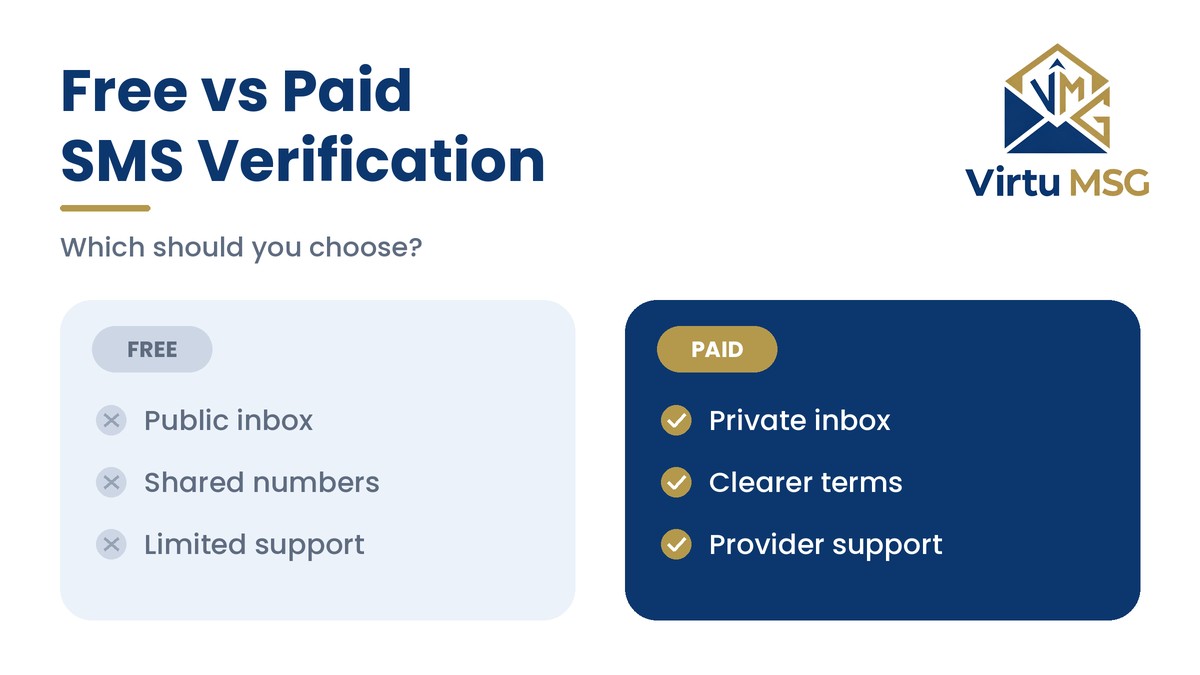
Free SMS verification services usually give you a public virtual number. Incoming text messages are shown on a web page, so anyone who opens that page can read every message the number receives, including verification codes.
These numbers are often temporary and shared by many people at the same time. They can be useful for quick tests, but they work in a very different way from a number that belongs only to you.
𝗔𝗿𝗲 𝗙𝗿𝗲𝗲 𝗦𝗠𝗦 𝗩𝗲𝗿𝗶𝗳𝗶𝗰𝗮𝘁𝗶𝗼𝗻 𝗡𝘂𝗺𝗯𝗲𝗿𝘀 𝗦𝗮𝗳𝗲?
For anything connected to your identity, money, or an account you care about, public numbers are a poor choice. Because the inbox is open, another person could see the same code at the same time. Some free sites may also keep records of the numbers and platforms being verified, so it is worth reading a site's privacy information before using it.
Free numbers are better suited to low-stakes situations, such as testing a sign-up flow or seeing what messages a service sends.
𝗪𝗵𝘆 𝗙𝗿𝗲𝗲 𝗡𝘂𝗺𝗯𝗲𝗿𝘀 𝗢𝗳𝘁𝗲𝗻 𝗗𝗼𝗻'𝘁 𝗪𝗼𝗿𝗸
If a free SMS verification number fails, the cause is usually one of these:
- Public numbers are used by many people, so some platforms detect and block them.
- Messages can arrive slowly, and a code may expire before you can use it.
- Free numbers can disappear, be reused, or be reassigned to other users.
- There is usually no support team and no guarantee that a code will arrive.
The type of number also matters, whether it is free or paid. Some platforms state their own rules. For example, Line's Help Center lists virtual phone numbers among the numbers that cannot be used for verification, and Airbnb's help page says most virtual numbers, such as VoIP services, may not be able to receive its verification code.
𝗪𝗵𝗮𝘁 𝗣𝗮𝗶𝗱 𝗦𝗠𝗦 𝗩𝗲𝗿𝗶𝗳𝗶𝗰𝗮𝘁𝗶𝗼𝗻 𝗦𝗲𝗿𝘃𝗶𝗰𝗲𝘀 𝗢𝗳𝗳𝗲𝗿
Paid services usually provide a private number or a private inbox, so only you can see the messages. Depending on the provider, you may also get clearer terms, customer support, and extras such as API access for developers and businesses. Always check what a specific provider actually offers.
A paid service does not guarantee that a platform will accept the number. Each platform decides which phone numbers it supports, and those rules can change. Services such as VirtuMSG provide virtual numbers for receiving verification codes on platforms that allow them, but you should always check the platform's own guidance first.
𝗙𝗿𝗲𝗲 𝘃𝘀 𝗣𝗮𝗶𝗱 𝗦𝗠𝗦 𝗩𝗲𝗿𝗶𝗳𝗶𝗰𝗮𝘁𝗶𝗼𝗻: 𝗪𝗵𝗶𝗰𝗵 𝗦𝗵𝗼𝘂𝗹𝗱 𝗬𝗼𝘂 𝗖𝗵𝗼𝗼𝘀𝗲?
A free service may be enough for:
- Testing how a sign-up or verification flow works.
- One-time accounts that you would not mind losing.
- Checking what kind of messages a service sends.
A paid service is worth considering for:
- Business or long-term accounts.
- Situations where you do not want strangers to see your codes.
- Repeated verification needs where reliability and support matter.
Neither option suits platforms that do not accept virtual numbers, or sensitive accounts such as banking. In those cases, use your own real number and follow the provider's rules.
𝗛𝗼𝘄 𝘁𝗼 𝗖𝗵𝗼𝗼𝘀𝗲 𝗮𝗻 𝗦𝗠𝗦 𝗩𝗲𝗿𝗶𝗳𝗶𝗰𝗮𝘁𝗶𝗼𝗻 𝗦𝗲𝗿𝘃𝗶𝗰𝗲
- Read the platform's official rules on phone numbers before you buy or use anything.
- Check whether the messages are private or public.
- Find out how long a number stays active and whether numbers are reused.
- Look for clear pricing and a refund policy if a code does not arrive.
- Check whether the provider offers support.
- Be careful with any service that promises guaranteed acceptance or "no bans".
- Do not use virtual numbers to avoid platform rules, verification steps, or account restrictions.
𝗙𝗶𝗻𝗮𝗹 𝗧𝗵𝗼𝘂𝗴𝗵𝘁𝘀
The main difference in free vs paid SMS verification is privacy and reliability: free numbers are public and unpredictable, while paid numbers are usually private and come with clearer terms. Neither can promise that a platform will accept the number, so the best approach is to match the service to how important the account is and to check the platform's official rules first.
Tag Lines :- free vs paid sms verification, free sms verification, paid sms verification service, are free sms verification numbers safe, receive sms online free, free phone number for sms verification, temporary phone number for sms verification, why free sms verification numbers don't work, public sms numbers not working, virtual number for sms verification, is it worth paying for sms verification, how to choose an sms verification service